With Ramzan approaching, household expenses in Pakistan often rise sharply. For low-income families, managing ration, utilities, and daily needs becomes even more stressful during this holy month. Keeping this reality in mind, the Punjab Government has officially launched the Ramzan Nigehban Package 2026, one of the largest cash-based relief initiatives in the province’s history.
Approved under the leadership of Chief Minister Maryam Nawaz Sharif, this program aims to provide timely financial support to millions of deserving households before Ramzan begins. Unlike traditional ration schemes, this package focuses on direct cash assistance, allowing families to manage their own needs with dignity.
What Is the Ramzan Nigehban Package 2026?
The Ramzan Nigehban Package 2026 is a province-wide social protection program designed to support vulnerable families during Ramzan. It was formally approved in a high-level government meeting attended by divisional commissioners and deputy commissioners from across Punjab.
The government has taken a data-driven approach this time. Instead of fresh registrations or manual applications, beneficiaries have been selected through verified socio-economic records. This strategy reduces delays, political influence, and errors that often affect welfare programs.
Key Objectives of the Package
The core purpose of this initiative includes:
-
Providing immediate financial relief before Ramzan
-
Supporting low-income and deserving families
-
Ensuring transparency through verified data
-
Eliminating middlemen and long ration queues

This shift towards cash assistance reflects a modern welfare mindset focused on flexibility and respect for beneficiaries.
Rs. 10,000 Cash Assistance for Millions of Families
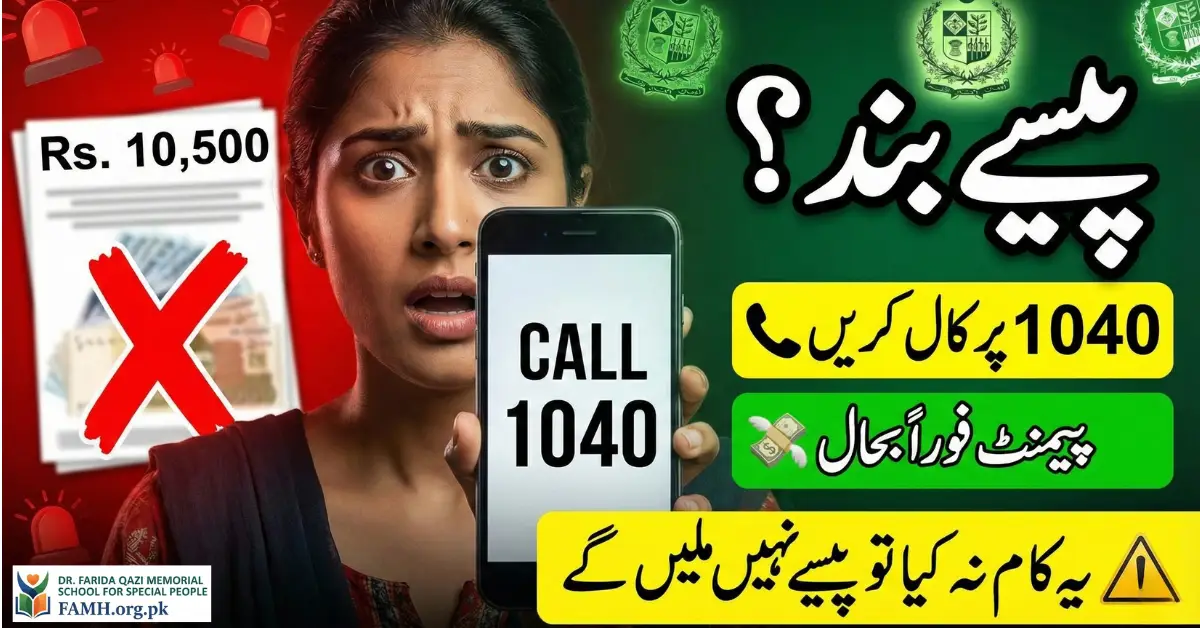
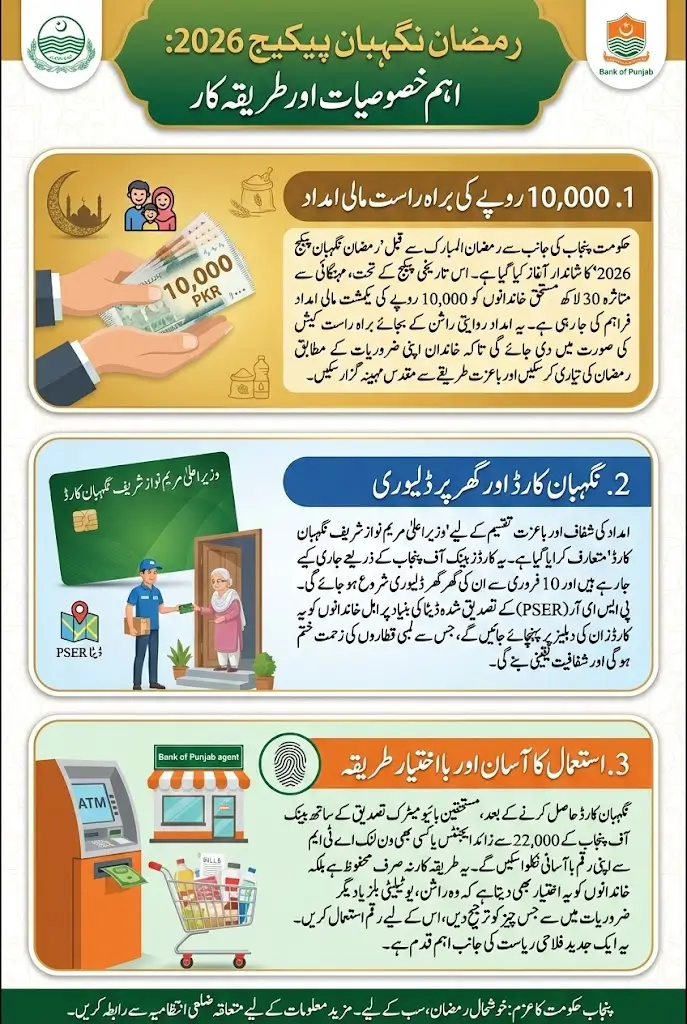
Under the Ramzan Nigehban Package 2026, the Punjab Government will provide Rs. 10,000 as a one-time cash grant to around 3 million deserving families across the province.
Beneficiaries have been identified through the Punjab Socio-Economic Registry (PSER), a door-to-door survey system that records household income, assets, and living conditions. By using PSER data, the government ensures that only genuinely deserving families receive assistance.
Who Is Eligible?
Families eligible for the package generally include:
-
Low-income households registered in PSER
-
Families meeting socio-economic vulnerability criteria
-
Beneficiaries verified through biometric data
There is no separate application process, which helps avoid confusion and overcrowding at offices.
Wazir-e-Aala Nigehban Card: A Modern Payment System
To distribute the cash assistance securely, the government has introduced the Wazir-e-Aala Punjab Maryam Nawaz Sharif Nigehban Card, issued by the Bank of Punjab.
This card is not just for Ramzan. Officials have indicated that it may be used for future welfare cash transfers as well, making it a long-term social protection tool.
Benefits of the Nigehban Card
-
Secure and traceable payments
-
Biometric verification to prevent fraud
-
Easy cash withdrawal through ATMs and agents
-
Reduced chances of misuse or duplication
This system aligns with other major programs like BISP and Ehsaas, which also rely on digital and biometric verification.
Door-to-Door Card Distribution System
One of the most appreciated features of the Ramzan Nigehban Package 2026 is its doorstep delivery model. Instead of asking beneficiaries to visit offices or banks, the government has arranged home delivery of Nigehban Cards.
According to official updates:
-
Cards will be collected from Bank of Punjab centers starting 8 February 2026
-
Door-to-door distribution will begin from 10 February 2026
With support from district administrations, PSER enumerators, and The Urban Unit, cards will be delivered directly to verified households.
Why This Matters
-
Elderly and disabled individuals avoid travel
-
Women feel safer receiving assistance at home
-
Reduced risk of agent involvement and fraud
How to Use the Nigehban Card
Once received, beneficiaries must complete biometric verification before using the card. After verification, the Rs. 10,000 amount can be accessed through multiple channels.
Available Usage Options
-
Cash withdrawal from over 22,000 Bank of Punjab agents
-
Withdrawal from any 1-Link ATM
-
Purchases from POS-enabled Bank of Punjab merchants
Clear instructions are provided during delivery, making the process easier even for first-time card users.
Role of District Administration
The Punjab Social Protection Authority has directed all Deputy Commissioners to actively supervise the implementation of this package. District-level monitoring ensures smooth distribution, complaint handling, and transparency.
Strong local administration involvement often determines the success of large welfare programs, especially in rural and underdeveloped areas.
Why the Ramzan Nigehban Package 2026 Is Important
For families living on limited incomes, Rs. 10,000 before Ramzan can make a real difference. It helps cover essential items like flour, cooking oil, pulses, and utility bills. More importantly, it allows families to observe Ramzan with peace and dignity.
This initiative signals a shift from symbolic relief to practical, needs-based support. Cash assistance gives people control over their priorities, which is crucial during times of inflation.
Final Thoughts
The Ramzan Nigehban Package 2026 stands out as one of Punjab’s most structured and transparent welfare initiatives. With verified data, biometric security, doorstep delivery, and modern banking channels, it sets a strong example for future social protection programs.
If implemented on the ground as planned, this package will bring meaningful relief to millions of families during the holy month.
FAQs – Ramzan Nigehban Package 2026
Q1: Is registration required for this package?
No. Beneficiaries are selected automatically through PSER data.
Q2: How much cash assistance is given?
Each eligible family receives Rs. 10,000 one-time.
Q3: How will beneficiaries receive the money?
Through the Wazir-e-Aala Nigehban Card issued by Bank of Punjab.
Q4: When will card distribution start?
Door-to-door delivery is expected to begin from 10 February 2026.
Q5: Can the card be used after Ramzan?
Yes. The card may be used for future government welfare programs.